
An AED replacement order should identify the device and accessory reference, then record pad use-by date, battery install-by date and battery installation date in separate fields. A battery storage deadline is not the same as its expected life after installation, and an advertised shelf life does not tell you how much time remains on the batch being offered. Ask for actual label dates, planned quantities and who will complete the manufacturer-required checks after replacement. The responsible AED coordinator should confirm the replacement decision against the current device instructions.
Why one expiry column is not enough
A spreadsheet headed “AED expiry” mixes a reusable device with consumables that have different date meanings. Give each AED an asset ID, then give its pads and battery their own records. Keep unopened spares separate from accessories already installed in a device.
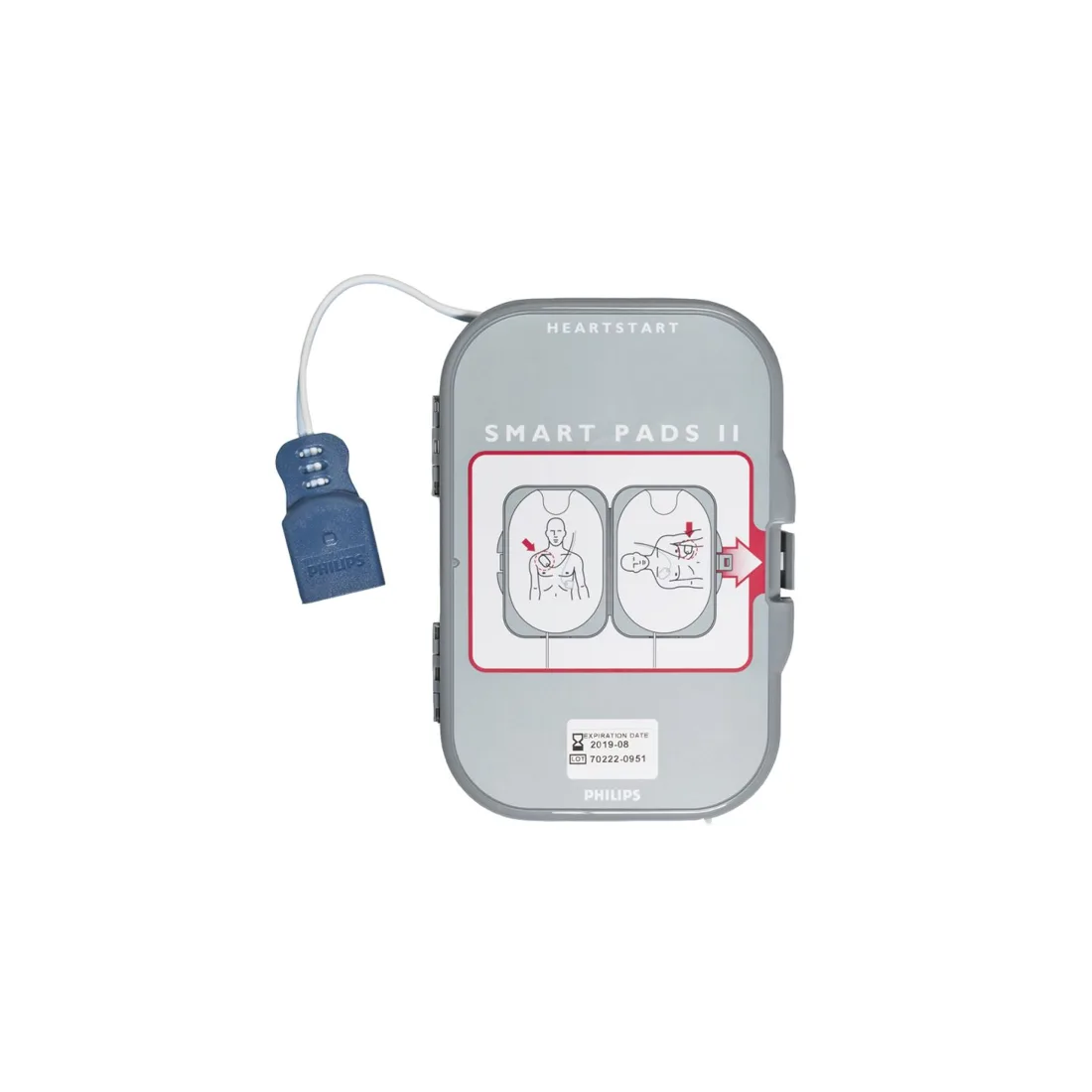
Philips’ FRx brochure provides a concrete example: SMART Pads II carry a use-by date, while the M5070A battery carries an install-by date and has a separately described standby life. The brochure identifies SMART Pads II as reference 989803139261. These are model-specific examples, not replacement intervals for every AED.
Copy the wording next to each date as well as the date itself. If a label is unclear, ask the supplier or manufacturer to interpret it for that exact reference. Do not turn an install-by date into a pad-style expiry date, or calculate a service deadline from a photograph of another unit.
References: Philips: HeartStart FRx brochure, accessory specifications (page 7)
Ask about the batch you will receive
The current Philips battery shop page describes M5070A storage life before insertion as at least five years from manufacture under the stated conditions. It separately gives a typical four-year standby life when installed by its install-by date. Neither statement promises a fresh five-year storage period from the day a buyer receives an order.
Ask the supplier to state the actual dates on the offered pads and battery labels. If the final batch has not yet been allocated, agree a minimum remaining period at receipt and require confirmation before dispatch. Make clear whether that period applies to pad use-by or battery install-by; they are different acceptance fields.
Also record when a spare is expected to enter service. A spare bought for a later maintenance round needs a suitable storage window, not just a compatible connector. The coordinator should approve that window against the current manual, storage conditions and site plan. A typical standby-life figure is not a warranty or permission to ignore device warnings.
References: Philips AED shop: HeartStart OnSite/Home/FRx M5070A battery
Group quantities only after matching references
Start the request with the manufacturer, exact AED model and local asset ID. Add the existing accessory part number if known, and ask the supplier to state the proposed reference explicitly. Keep unresolved models on separate lines rather than combining them into “pads for all AEDs”.
Label each line as an installed replacement or an unopened spare. State whether you require a complete pad set and whether any connector or adapter is included. Have the AED coordinator confirm the required adult/child configuration from the device instructions; a generic age label or product-family name is not enough to approve an accessory.
Keep classroom equipment on a separate request. Philips lists Training SMART Pads II under a different reference, 989803139271, and describes their training-mode function separately from SMART Pads II. A purchasing team should not substitute a training accessory to meet an emergency-equipment order.
References: Philips: HeartStart FRx brochure, accessory specifications (page 7)
Worked example: three devices do not mean three identical kits
Imagine a facilities team with three AED asset records. This is an illustrative purchasing exercise, not a clinical replacement decision or a MedSphere quotation. The coordinator has approved the following work after reviewing each device.
Reception needs one replacement pad set; its battery is not included in this request. Warehouse needs one battery; its pad set is not included. The mobile team has an unreadable accessory reference and asks for one spare pad set. Purchasing therefore has two orderable lines and one identification question, rather than three generic pad-and-battery bundles.
Before consolidating the lines, obtain the exact references and date requirements for Reception and Warehouse. Hold the mobile-team purchase pending identification. If its approved pad reference later matches Reception, combine the purchasing quantity but preserve the two allocations: one set for installation and one unopened spare.
This avoids two common recording mistakes: buying a battery merely because pads are being replaced, and treating an unopened spare as if it had already been installed. Any immediate readiness concern belongs with the responsible coordinator under the site response plan; a pending purchase is not confirmation that an AED is ready.
Close the order with a handover record
Receiving should compare the delivered reference, quantity, seal condition and label dates against the accepted quotation. Record which item goes to which asset or spare-storage location. Resolve a different part number or shorter remaining period before treating the delivery as the approved replacement.
The assigned coordinator then records the actual installation date, follows the current manufacturer instructions for checks and returns the completed record to the asset owner. Set the next review using those instructions and the site programme. Do not copy a generic four-year reminder onto every battery or restart a pad’s use-by period when its carton is opened.
Paste your asset-by-asset requirements into the quotation form, including references, quantities, required date evidence and delivery city and country. The AED pads and battery links below are enquiry starting points. MedSphere confirms the offered parts, availability and delivery terms in the quotation for UAE, Saudi Arabia, Oman and Qatar enquiries; this guide does not confirm stock or installation services.
AED consumables purchasing and handover checklist
| Record | What to confirm |
|---|---|
| Device identity | Asset ID, location, manufacturer and exact AED model. |
| Accessory identity | Approved part reference, proposed reference and any unresolved compatibility question. |
| Purpose and quantity | Emergency-use accessory; complete pad sets or batteries; installed replacements versus unopened spares. |
| Pad date | Actual use-by date, or an agreed minimum remaining period at receipt with final batch confirmation. |
| Battery storage date | Actual label wording and install-by date; intended installation window and storage requirements. |
| Installed battery record | Actual installation date and the current manufacturer basis for the next review or replacement. |
| Receiving evidence | Accepted quotation matched to references, seals, quantities and labels; asset or spare-store allocation. |
| Handover owner | Person completing manufacturer-required checks and updating the asset record; any service scope quoted separately. |
Questions before you order
Does a battery install-by date mean its installed service ends on that date?
Do not treat those as the same field. Confirm the label meaning and the separate installed-life instructions for the exact battery and AED. Keep the actual installation date in the asset record.
Do pads and batteries always need replacing together?
Do not assume that from a combined supplier bundle. Have the AED coordinator confirm what each device needs using its current instructions and condition, then order the approved parts separately where appropriate.
Does a stated shelf life guarantee that much time remains when delivery arrives?
No. Ask for the dates on the offered batch or agree a minimum remaining period at receipt. The clock may start at manufacture rather than at purchase.
What should I send if the old accessory reference cannot be read?
Send the exact AED model and a readable device-label photo for identification. Mark the accessory reference as unresolved and ask for documented matching information before purchase; do not guess from the connector or case colour.
Sources & scope
This is a purchasing guide. Your qualified safety lead should confirm the current requirements for your site. It is not a clinical protocol or a compliance certificate.
- Philips: HeartStart FRx brochure, accessory specifications (page 7)
Manufacturer-hosted brochure, May 2016 edition, checked against its accessory specification table. Used for the distinct pad use-by, battery install-by and standby-life fields, plus SMART Pads II and training-pad references. A model example, not a current local approval or a universal maintenance schedule; confirm the current instructions supplied for your device. Checked 30 October 2026.
- Philips AED shop: HeartStart OnSite/Home/FRx M5070A battery
Current US Philips-branded product page used to cross-check the distinction between storage life from manufacture and typical standby life after installation by the stated date. Its prices, stock, shipping terms and regional sales conditions are not MedSphere offers. Checked 30 October 2026.
Prepared with AI assistance and checked against the cited sources. No clinical reviewer is claimed. Read our editorial policy or send a correction.
Explore the catalog
These products are available for enquiry. Specifications, contents and delivery are confirmed in your quotation.