
Order AED trainers and emergency-use AEDs as separate items with separate quantities. A trainer is for practice and must not be counted as an AED available for an emergency. For each training package, confirm the exact model, spoken languages, compatible training pads, power requirements and included accessories. Have your training lead approve the proposed package; MedSphere must confirm the offered configuration and supply in a quotation.
1. Count devices by purpose before comparing offers
An order described only as “five AED units” leaves an important question unanswered: how many are intended for emergency use, and how many are training devices? Start with two lines in the purchasing brief. Give each line its purpose, quantity and proposed model before comparing the total cost.
Consider a hypothetical request for two emergency-use AEDs and three classroom trainers. That is five physical devices, but only two belong in the emergency-use equipment count. This is an accounting example, not a recommendation for site coverage or the number of trainees per device. Your responsible site and training leads should determine those requirements.
Philips’ HeartStart FRx Trainer instructions state that the trainer cannot deliver defibrillation treatment. The manual linked from its current product page is Edition 5, published in June 2010; use this as a model-specific distinction, and request the documentation applicable to the equipment actually offered.
References: Philips: HeartStart FRx Trainer instructions, Edition 5
2. Define what one training package contains
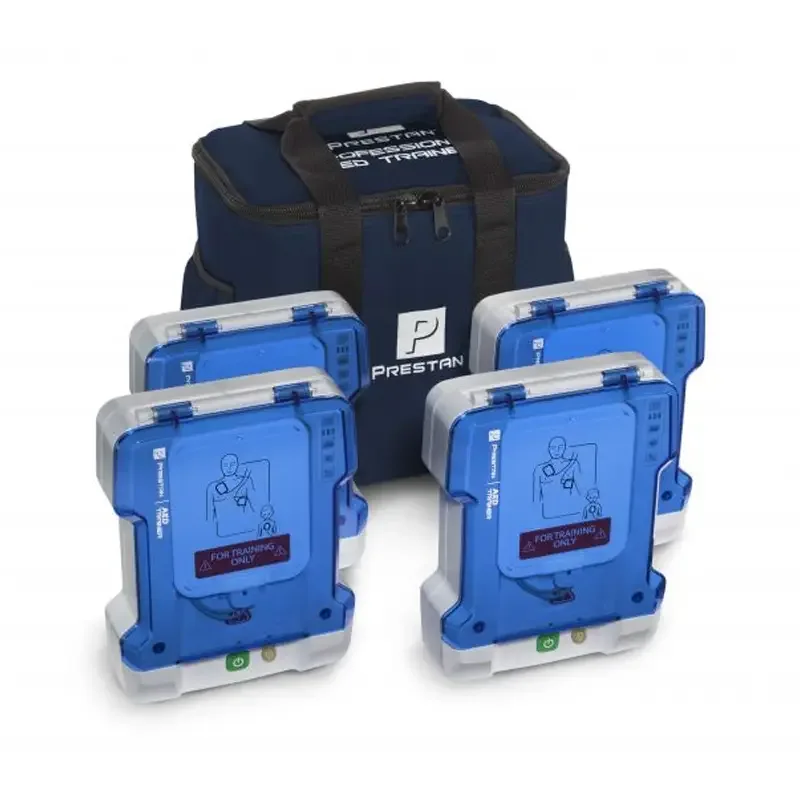
A photograph may show several devices or a carrying bag without describing the quoted package. Ask for the number of trainers per pack and the number of packs ordered. List accessories individually as included, optional or awaiting confirmation.
PRESTAN’s current Professional AED Trainer PLUS page offers single and four-pack configurations and describes the remote as optional. It also describes updated pads and sensing technology. Ask the supplier to identify the offered version and its compatible replacement pads; do not assume an older accessory reference or a pictured remote is included.
For a classroom order, record the training pads, pad cables or cases where required, carrying bag, remote if requested, and power source. Ask which power items are supplied. If you already own manikins, provide their models and ask the supplier to identify any required adapter or other interface. Let the training lead approve compatibility before purchase.
References: PRESTAN: Professional AED Trainer PLUS
3. Confirm languages for every trainer
Write the languages your instructors and learners need in the enquiry. A translated leaflet and a device’s spoken prompts are different requirements; ask the supplier to confirm each one where relevant.
PRESTAN’s language-module page says that each Professional AED Trainer PLUS needs its own module. It lists English/Spanish and English/French as standard options and says other languages depend on the distributor’s geographic area. An English/Arabic catalog listing should therefore be resolved to the offered model and module in the quotation, rather than inferred from the appearance of the unit.
For example, a request for three trainers needing the same language pair should ask for that configuration on all three devices. Record whether the required modules are fitted, separately supplied or still awaiting confirmation. Ask the training lead to confirm that the proposed version and prompts suit the course being delivered.
References: PRESTAN: Professional AED Trainer PLUS language module
4. Keep training-pad orders separate from clinical pads
“AED replacement pads” is too broad for a mixed training and emergency-equipment order. Give each pad line a purpose, compatible device model, manufacturer part reference where known, quantity and pack unit. Do the same for any batteries or other replacement parts requested.
Philips’ Saudi product page identifies Training Pads II as training materials and states that they put the HeartStart FRx into training mode, disabling energy delivery. Its compatibility table names specific Philips equipment. This illustrates why a familiar product family name or connector appearance does not establish the intended use or compatibility of a replacement item.
Ask for the manufacturer documentation for the exact offered part, and have the responsible equipment or training lead approve it. The Philips example is not a statement that these pads fit a PRESTAN or Amoul trainer, or that they are available from MedSphere. This guide covers purchasing records, not pad fitting or device operation.
References: Philips Saudi Arabia: Training Pads II
5. Keep the distinction through receiving and handover
Use separate references for the emergency-equipment and training-equipment lines when checking the delivery. Record the actual model, quantity, supplied accessories, language configuration and destination against each reference. Keep unresolved items visible rather than marking the entire mixed order complete.
Ask the responsible team to agree clear identification and storage arrangements for training equipment. The FRx Trainer manual specifically warns against storing that trainer with the defibrillator or where the two could be confused during an emergency. Follow the applicable manufacturer instructions for the models purchased.
For a MedSphere quotation, paste your two lists, country and city, and any existing manikin or device model references. For enquiries from the UAE, Saudi Arabia, Oman and Qatar, the offered configuration, availability, delivery and any requested training service require confirmation. Equipment supply alone does not establish that a course or certification is included.
References: Philips: HeartStart FRx Trainer instructions, Edition 5
AED and trainer quotation brief
| Detail | What to confirm |
|---|---|
| Purpose and count | Separate emergency-use AED and training-device lines; count devices as well as packs. |
| Exact offered version | Manufacturer, model, version and documentation applicable to each line. |
| Language configuration | Required spoken languages on every trainer, fitted modules and any document-language requirement. |
| Pads and replacement parts | Training or clinical purpose, compatible model, part reference, pack unit and quantities. |
| Included accessories | Pads, cables, cases, carrying bags, requested remotes and any manikin adapters; identify optional items. |
| Power requirements | Required power source and which batteries or other power items are included in the offer. |
| Training-lead approval | Confirmation that the model, prompts, version and manikin interface suit the intended course. |
| Receiving and delivery | Separate equipment references, actual contents, identification/storage handover, destination and confirmed supply terms. |
Questions before you order
Can I count an AED trainer as an emergency-use AED?
No. Keep the training-device count separate from emergency-use equipment. The FRx Trainer manufacturer instructions, for example, expressly state that the trainer cannot deliver defibrillation treatment.
Does a four-trainer photograph mean the quotation includes four devices?
Only the quoted pack description and quantity establish what is offered. Confirm devices per pack, number of packs and included accessories; the photograph is a reference.
Can I request English and Arabic prompts?
State both languages in your MedSphere enquiry and ask for the exact offered model and language-module configuration on every trainer. Availability and the supplied configuration must be confirmed in the quotation.
Will training pads fit any AED trainer?
Do not assume compatibility. Provide the trainer’s model and requested pad reference, and obtain manufacturer compatibility information for the exact version before accepting a substitute.
Sources & scope
This is a purchasing guide. Your qualified safety lead should confirm the current requirements for your site. It is not a clinical protocol or a compliance certificate.
- Philips: HeartStart FRx Trainer instructions, Edition 5
June 2010 manual currently linked from Philips’ FRx Trainer product page. Printed pages 2–3 establish the training-only purpose and warning against confusion with an emergency-use device. Not used for clinical protocols; request documentation for the actual offered model/version. Checked 24 October 2026.
- PRESTAN: Professional AED Trainer PLUS
Manufacturer’s current single/four-pack choices, optional remote and updated training-pad system. Used to identify purchasing questions, not to confirm MedSphere pack contents, stock or a particular accessory version. Checked 24 October 2026.
- PRESTAN: Professional AED Trainer PLUS language module
Each trainer requires its own language module; the manufacturer distinguishes standard language pairs from options dependent on distributor geography. Does not itself verify an English/Arabic offer or Gulf availability. Checked 24 October 2026.
- Philips Saudi Arabia: Training Pads II
Manufacturer’s model-specific training-purpose and compatibility description. The page warns that availability varies by geography. Not a cross-brand compatibility claim, regional approval or MedSphere supply confirmation. Checked 24 October 2026.
Prepared with AI assistance and checked against the cited sources. No clinical reviewer is claimed. Read our editorial policy or send a correction.
Explore the catalog
These products are available for enquiry. Specifications, contents and delivery are confirmed in your quotation.