
Order test strips by the exact meter they will be used with, not by price per strip. The SD CodeFree manual says to use only SD CodeFree strips with that meter, because other strips can give inaccurate results, and the FDA advises buying new, unopened vials rather than pre-owned strips. Plan storage before delivery: the same manual gives 2–32 °C, out of direct sun and heat, not in a fridge, and a discard date 6 months after the vial is first opened, so order in quantities you will use. If more than one person will be tested, CDC guidance says lancing devices must be single-use and never used for more than one person, and a shared meter must be cleaned and disinfected after every use following the manufacturer’s instructions.
Start with the meter, then order its strips
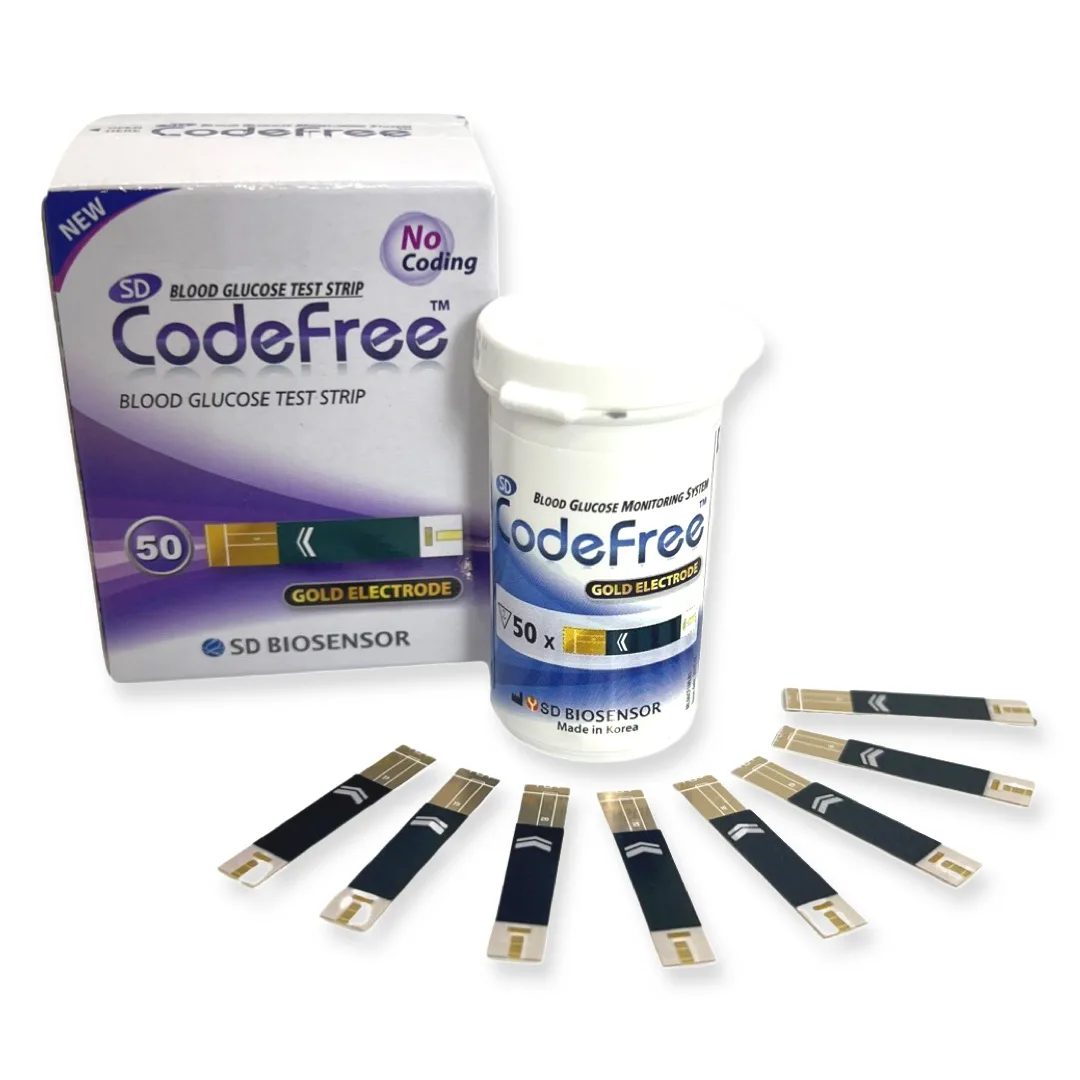
Test strips are not interchangeable. The SD CodeFree user manual says to use only SD CodeFree test strips with its meter and warns that other strips can cause inaccurate results. We list two strip types, SD CodeFree and VivaChek Ino, and each is for its own meter.
Before ordering, write down the brand and model of every meter in the clinic, nurse room or first aid room, and order strips for each one by name. If you are buying a new meter, quote the meter and its strips together, and ask which units it displays: mmol/L or mg/dL. Your clinical lead decides the unit the team works in.
Buy from a supplier who sells new, sealed stock. The FDA recommends new, unopened vials and advises against pre-owned test strips, which may have been opened, stored badly or had their expiry dates changed or covered.
References: SD Biosensor: SD CodeFree blood glucose monitoring system user instruction manual · U.S. FDA: How to safely use glucose meters and test strips for diabetes
Storage in Gulf heat and the opened-vial date
The SD CodeFree manual says to store strip containers in a cool, dry place at 2–32 °C (36–90 °F), away from direct sunlight and heat, and not to refrigerate them. It also says to keep strips in their original container and close the cap tightly straight after taking a strip out.
In a Gulf summer, that rules out a vehicle glovebox, a site cabin without air conditioning or a shelf in the sun. Keep strips with the meter in an air-conditioned room, and check the storage range on the leaflet of the brand you buy, since it is not the same for every strip.
The same manual says to write the opening date on the vial and discard any remaining strips 6 months after first opening. A 50-strip pack comes as two vials of 25 in our catalog, so a low-use first aid room can open one vial at a time. Order in quantities you will use before the printed expiry and the opened-vial date.
References: SD Biosensor: SD CodeFree blood glucose monitoring system user instruction manual
Lancets and meters when more than one person is tested
A site clinic, school or labour accommodation clinic may test many people with one meter. CDC guidance for assisted blood glucose monitoring says fingerstick devices should be single-use and auto-disabling in these settings and should never be used for more than one person. It recommends single-use lancets that permanently retract after puncture, disposed of straight into a sharps container.
For meters, CDC says to assign a meter to one person whenever possible. If a meter is shared, it must be cleaned and disinfected after every use following the manufacturer’s instructions, and if the manufacturer gives no cleaning and disinfection instructions, it should not be shared. CDC also suggests choosing a meter designed for professional use in these settings rather than an over-the-counter one.
So order single-use safety lancets in boxes sized to the number of tests, a sharps container, gloves and the disinfectant wipes the meter manual names. CDC also lists gloves changed between people, hand hygiene, staff training and periodic observation as part of safe practice.
References: CDC: Considerations for blood glucose monitoring and insulin administration
Control solution, checks and reporting problems
The FDA advises testing the meter regularly with a control solution to make sure the strips and meter work properly together, as often as the meter’s instructions say. The SD CodeFree manual asks for the control solution, meter and strips to be at room temperature, 18–30 °C, before a control test, and for the solution to be stored tightly closed at 8–30 °C and not refrigerated.
Ask whether control solution is included with the meter or quoted separately, and add it to the order if not. Record each control test, the strip lot and the opened-vial date on the same sheet.
If a meter or strips seem to give wrong results, stop using that vial, keep it and the packaging, and contact the supplier. In the UAE, report suspected medical device problems through your regulator’s channel.
References: U.S. FDA: How to safely use glucose meters and test strips for diabetes · SD Biosensor: SD CodeFree blood glucose monitoring system user instruction manual
Glucose test strip order checklist
| Item | What to confirm |
|---|---|
| Meters in use | Brand and model of each meter; strips ordered by name for each. |
| Units | mmol/L or mg/dL on the meter, agreed with the clinical lead. |
| Stock condition | New, sealed vials; no pre-owned or relabelled strips. |
| Expiry | Printed expiry date confirmed in the quotation. |
| Quantity | Tests per month against the opened-vial discard date and the expiry. |
| Storage | Air-conditioned room inside the strip’s storage range; not in vehicles or sun. |
| Lancets | Single-use, auto-disabling safety lancets where more than one person is tested. |
| Shared meter | Professional-use meter with manufacturer cleaning and disinfection instructions. |
| Consumables | Sharps container, gloves, approved disinfectant wipes, control solution. |
| Records | Opened-vial date, strip lot and control test results kept together. |
Questions before you order
Can I use any test strips with my glucose meter?
No. Use the strips made for that meter. The SD CodeFree manual, for example, says only SD CodeFree strips should be used with its meter because other strips can give inaccurate results.
How long do test strips last after the vial is opened?
It depends on the brand. The SD CodeFree manual says to discard remaining strips 6 months after first opening the vial. Write the opening date on the label.
Can test strips be kept in a fridge or a vehicle?
The SD CodeFree manual says to store them at 2–32 °C, away from sun and heat, and not to refrigerate them. A parked vehicle in the Gulf can exceed that range.
Can one lancing device be used for several people?
No. CDC guidance says fingerstick devices should be single-use and never used for more than one person. Use single-use safety lancets.
Do you quote meters, strips and lancets together?
Yes. Send the meter model or the number of people you test, and we quote the meter, matching strips, lancets and expiry dates as separate lines.
Sources & scope
This is a purchasing guide. Your qualified safety lead should confirm the current requirements for your site. It is not a clinical protocol or a compliance certificate.
- SD Biosensor: SD CodeFree blood glucose monitoring system user instruction manual
Manufacturer user manual (undated), read on a third-party manuals site, pages on test strips and control solution. Used for using only SD CodeFree strips, 2–32 °C storage away from sun and heat, no refrigeration, original container and closed cap, the 6-month opened-vial discard date and control solution temperatures. Other strip brands have their own storage terms; confirm against the leaflet supplied. Checked 9 November 2026.
- U.S. FDA: How to safely use glucose meters and test strips for diabetes
US FDA consumer update (content current as of 1 November 2021). Used for buying new, unopened vials rather than pre-owned strips, the risks of resold strips, proper storage and expiry, and regular control solution testing. US guidance; not a UAE or GCC requirement. Checked 9 November 2026.
- CDC: Considerations for blood glucose monitoring and insulin administration
US Centers for Disease Control and Prevention infection control guidance (updated 7 August 2024), covering clinics, schools, camps and other settings. Used for single-use auto-disabling fingerstick devices, retracting lancets and sharps disposal, assigning or disinfecting shared meters, professional-use meters, gloves, hand hygiene, training and observation. US guidance; follow your own regulator. Checked 9 November 2026.
Prepared with AI assistance and checked against the cited sources. No clinical reviewer is claimed. Read our editorial policy or send a correction.
Explore the catalog
These products are available for enquiry. Specifications, contents and delivery are confirmed in your quotation.