
Treat a back support belt as an optional comfort item, not as protection against back injury. The Canadian Task Force on Preventive Health Care reviewed the trials and found the evidence conflicting, so it could not recommend for or against back belts to prevent work-related low-back pain, and it listed possible harms such as rubbing, sweating and a false sense of security. UK HSE guidance puts the employer’s duty elsewhere: avoid hazardous manual handling where reasonably practicable, assess what cannot be avoided, and reduce the risk, for example with lifting and handling aids. Do those steps first. If a worker or their doctor still wants a belt, order it by waist size for that person, check the fit and agree how long it is worn.
What the evidence says about back belts
The Canadian Task Force on Preventive Health Care reviewed five randomised trials of back belts at work. Three showed no benefit, one showed less lost time, possibly only among workers who already had low-back pain, and one showed a marginally lower rate of back injury. It concluded that the evidence is conflicting and does not allow a recommendation for or against back belts to prevent occupational low-back pain or reduce lost work time.
The same statement lists possible harms: rubbing, pinching or bruising of the ribs, difficulty sitting and driving, heavy sweating and a false sense of security, plus laboratory findings of raised blood and abdominal pressure and weakened back muscles that have not been proven in workers. It suggests belts be used only short term, after screening for cardiovascular risk and training in lifting. It notes that NIOSH and the Canadian Centre for Occupational Health and Safety do not support back belts as a preventive measure.
The review was published in 2003, so ask your occupational health adviser whether newer evidence changes this for your workforce. Nothing in it supports promising crews that a belt will prevent injury.
Manual handling controls come first
HSE says employers should avoid hazardous manual handling so far as reasonably practicable, assess the risk of injury from any that cannot be avoided, and reduce that risk to as low as reasonably practicable. It notes that the weight of a load matters, but the law does not set specific weight limits.
In practice that means looking at the task before buying anything for the worker: can the load be split, moved on a trolley or pallet truck, lifted by a hoist, or stored at waist height so nobody bends to the floor? HSE’s leaflet on lifting and handling aids says that using these aids can remove or reduce the risk of injury from manual handling.
Training matters too. Show crews how to plan a lift and use the aids provided, and record the assessment. A belt does not appear in that process, and HSE’s manual handling page does not mention back belts at all.
References: Health and Safety Executive: Manual handling at work · Health and Safety Executive: Making the best use of lifting and handling aids (INDG398)
If you still order belts: size, fit and use
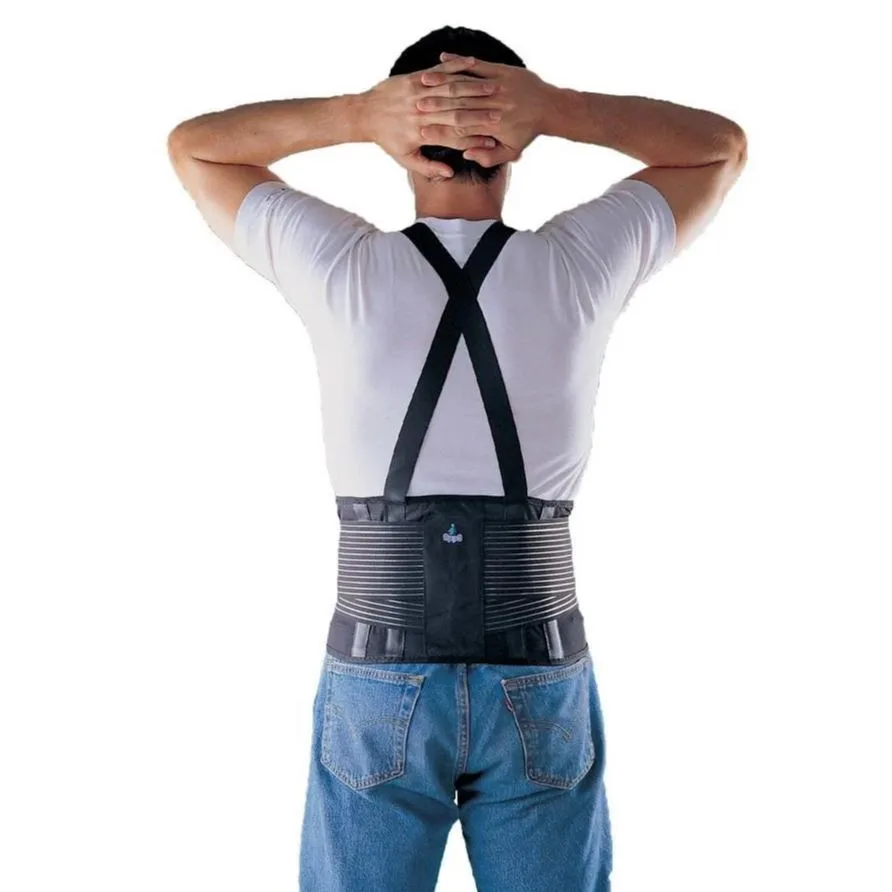
Some workers ask for a belt for comfort, or their own doctor suggests one after an injury. If you supply them, order per person rather than in bulk. The OPPO 2169 we list has shoulder straps and is listed in L, XL and 2XL, and our quotation confirms the waist measurement for each size, so collect each wearer’s waist measurement first.
Check the fit on the person in the clothes they work in. Given the harms the Canadian review lists, ask wearers to report rubbing, bruising or problems sitting or driving, and agree with the occupational health adviser how long the belt is worn each day.
In Gulf heat, sweating under a belt is a real issue on outdoor sites. Plan breaks, spares so a belt can be washed and dried, and hygiene rules so belts are not shared between workers.
Back support belt checklist
| Item | What to confirm |
|---|---|
| Risk assessment | Manual handling tasks assessed; which can be avoided or redesigned. |
| Handling aids | Trolleys, pallet trucks, hoists or storage changes in place first. |
| Training | Crews trained on planning lifts and using the aids provided. |
| Reason for a belt | Worker request or medical advice, recorded by occupational health. |
| Health screen | Occupational health check before use, including cardiovascular risk. |
| Size | Each wearer’s waist measurement against the size chart in the quotation. |
| Fit | Fit checked in work clothing; straps adjusted. |
| Wear time | Daily wear time and review date agreed. |
| Heat and hygiene | Breaks, spares for washing, one belt per person. |
| Feedback | How wearers report rubbing, bruising or other problems. |
Questions before you order
Do back support belts prevent back injuries at work?
The evidence does not show that they do. The Canadian Task Force on Preventive Health Care found it conflicting and could not recommend for or against them, and noted that NIOSH does not support back belts as a preventive measure.
Is a back belt PPE for manual handling?
Do not rely on it as protection. HSE asks employers to avoid, assess and reduce manual handling risk, for example with lifting aids, and its manual handling page does not mention back belts.
Are there downsides to wearing a back belt?
The Canadian review lists rubbing, pinching or bruising, difficulty sitting and driving, sweating and a false sense of security, and suggests short-term use only.
How do I order the right size?
Measure each wearer’s waist and send the measurements. We confirm the size chart for the OPPO 2169, listed in L, XL and 2XL, in the quotation.
Sources & scope
This is a purchasing guide. Your qualified safety lead should confirm the current requirements for your site. It is not a clinical protocol or a compliance certificate.
- Canadian Task Force on Preventive Health Care: Use of back belts to prevent occupational low-back pain (CMAJ 2003;169(3):213-4)
Recommendation statement published 5 August 2003, based on a 2002 systematic review of five randomised trials. Used for the grade C (no recommendation either way) conclusion, trial results, potential harms, short-term use, screening and training, and the NIOSH and CCOHS positions it reports. Evidence is from 2002 and earlier. Checked 12 November 2026.
- Health and Safety Executive: Manual handling at work
UK HSE guidance page, updated 25 March 2024. Used for the duty to avoid, assess and reduce hazardous manual handling and the absence of legal weight limits. UK law; follow your own country’s rules. Checked 12 November 2026.
- Health and Safety Executive: Making the best use of lifting and handling aids (INDG398)
HSE leaflet page (2013, page updated 22 March 2021). Used only for its statement that lifting and handling aids can remove or reduce the risk of injury from manual handling. Checked 12 November 2026.
Prepared with AI assistance and checked against the cited sources. No clinical reviewer is claimed. Read our editorial policy or send a correction.
Explore the catalog
These products are available for enquiry. Specifications, contents and delivery are confirmed in your quotation.