
Stock wound closure strips where a nurse, doctor or site medic will apply them, and give general first aiders dressings instead. 3M’s instructions for its Steri-Strip skin closures say they are for closing lacerations and surgical incisions, to be used by medical professionals, and not on infected wounds, wounds under high tension or skin that is wet, oily or hairy. The NHS tells people to treat a cut by stopping the bleeding, cleaning it and covering it with a plaster or dressing, and to get medical help for cuts longer than about 5 cm, dirty wounds, bites, or bleeding that will not stop; a clinician then decides whether to close it with stitches, staples, strips or glue. When you do order strips, confirm size, sterile single pouches, latex status and the expiry date.
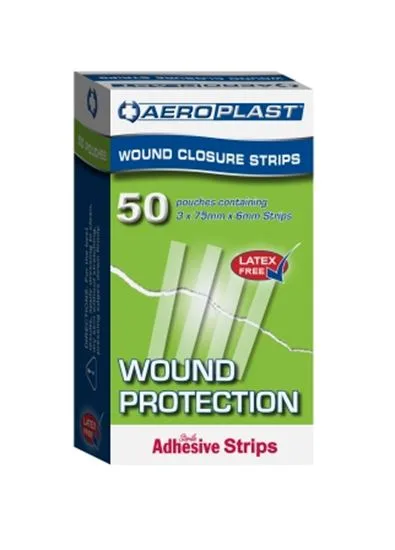
Who should apply closure strips
Closure strips hold the edges of a cut together while it heals. 3M’s instructions for use for Steri-Strip skin closures say they are indicated as a skin closure device for lacerations and surgical incisions and are to be used by medical professionals.
The same instructions list when not to use them: where exudate, skin oils, moisture or hair stop them sticking, on infected wounds, on high-tension wounds that cannot easily be brought together with fingers or forceps, and as a way of holding tubing in place.
For most workplaces, that means closure strips belong in the clinic, the nurse room or the site medic’s bag, not in every first aid box. Ask your medical lead who is trained to assess a wound and apply them, and keep the strips with that person’s kit.
References: 3M: Steri-Strip skin closures, sterile and non-sterile, instructions for use
What a first aider does with a cut instead
The NHS says a cut or graze can be treated by stopping any bleeding, cleaning the wound and covering it with a plaster or dressing. It advises pressure with a bandage or clean folded cloth, raising the limb, rinsing with tap or bottled water or sterile wipes, patting dry and applying a sterile dressing.
It advises an urgent GP appointment or NHS 111 for a wound with soil, pus or body fluids in it, a bite from a person or animal, a cut larger than around 5 cm, or signs of infection. It advises 999 or A&E if the bleeding cannot be stopped, blood spurts, there is loss of feeling or movement, there is a bad cut on the face or palm, the wound is very large or deep, or something such as glass is stuck in it.
The NHS also says that at hospital the cut is cleaned and closed with stitches, staples, strips or glue, and may not be closed straight away if it is infected or at risk of infection. That decision belongs to a clinician. Make sure every first aid box has enough sterile dressings, gauze and plasters, and put your local emergency number and nearest clinic on the lid.
References: NHS: Cuts and grazes
What to check when ordering strips
Strips come in different widths and lengths. We list 6 × 75 mm strips and Safe Care 0.6 × 10 cm closures; ask your clinician which sizes they use for the cuts they see, and confirm the brand and pack count in the quotation.
Check whether the strips are sterile and individually pouched. 3M’s instructions say its strips are sterilised by radiation or ethylene oxide, not to use them if the package is damaged or open, not to reuse strips and to dispose of unused strips. A pouch of three strips that is opened for one cut should not go back in the kit.
Ask for the latex status if anyone on site has a latex allergy; the box we list is marked latex free. 3M asks for storage at room temperature away from heat and humidity, and not to use expired strips or strips with a missing or illegible expiry date. In the Gulf, keep the clinic stock indoors and check dates at each kit inspection.
References: 3M: Steri-Strip skin closures, sterile and non-sterile, instructions for use
Skin injury, removal and incident records
3M’s precautions note that some people get skin irritation or injury during wear or removal, and that strips applied under tension, for example over a joint or swelling, can cause blistering or lose adhesion. Its instructions say to apply strips without tension, smooth them from the centre outward and space them about 3 mm apart.
For removal, the instructions say to peel each strip low and slow towards the centre of the wound while supporting the skin. Give the worker written aftercare from the clinic, including when to come back.
Record wound injuries and the treatment given in your incident log, and report suspected problems with a device to the supplier and your regulator.
References: 3M: Steri-Strip skin closures, sterile and non-sterile, instructions for use
Wound closure strip checklist
| Item | What to confirm |
|---|---|
| Who applies them | Nurse, doctor or site medic named by your medical lead. |
| Where they are kept | Clinic, nurse room or medic bag, not every first aid box. |
| First aid boxes | Sterile dressings, gauze and plasters for covering cuts instead. |
| Referral | Local emergency number and nearest clinic on the kit lid. |
| Size | Width and length the clinician uses, for example 6 × 75 mm. |
| Sterility | Sterile, individually pouched; damaged or opened pouches discarded. |
| Latex | Latex status stated for staff with latex allergy. |
| Expiry | Expiry date on every pouch, checked at each inspection. |
| Storage | Indoors at room temperature, away from heat and humidity. |
| Records | Wound, treatment and aftercare noted in the incident log. |
Questions before you order
Can a first aider use wound closure strips?
3M’s instructions for its Steri-Strip closures say they are to be used by medical professionals. Most first aiders should clean and cover a cut and refer it; ask your medical lead who may apply strips.
When does a cut need a clinic rather than a plaster?
The NHS advises medical help for cuts longer than around 5 cm, dirty wounds, bites, signs of infection, deep wounds, cuts on the face or palm, or bleeding that will not stop.
When should closure strips not be used?
3M lists infected wounds, high-tension wounds, skin where exudate, oil, moisture or hair stops adhesion, and use as a securement device.
Can an opened pouch of strips be kept?
No. 3M’s instructions say not to reuse strips and to dispose of unused strips, and not to use them if the package is damaged or open.
Do you supply latex-free closure strips?
The box we list is marked latex free. Tell us if you need latex-free stock and we confirm the brand, size and latex status in the quotation.
Sources & scope
This is a purchasing guide. Your qualified safety lead should confirm the current requirements for your site. It is not a clinical protocol or a compliance certificate.
- 3M: Steri-Strip skin closures, sterile and non-sterile, instructions for use
Manufacturer IFU (English section; no revision date printed). Used for indications, use by medical professionals, contraindications, single use, sterility, precautions on tension and skin injury, application spacing, removal and storage. It covers 3M strips; other brands have their own instructions. Checked 16 November 2026.
- NHS: Cuts and grazes
NHS page, last reviewed 2 April 2026. Used for first aid for cuts, when to seek urgent or emergency help and how hospitals close wounds. UK guidance; use your local emergency number. Checked 16 November 2026.
Prepared with AI assistance and checked against the cited sources. No clinical reviewer is claimed. Read our editorial policy or send a correction.
Explore the catalog
These products are available for enquiry. Specifications, contents and delivery are confirmed in your quotation.